
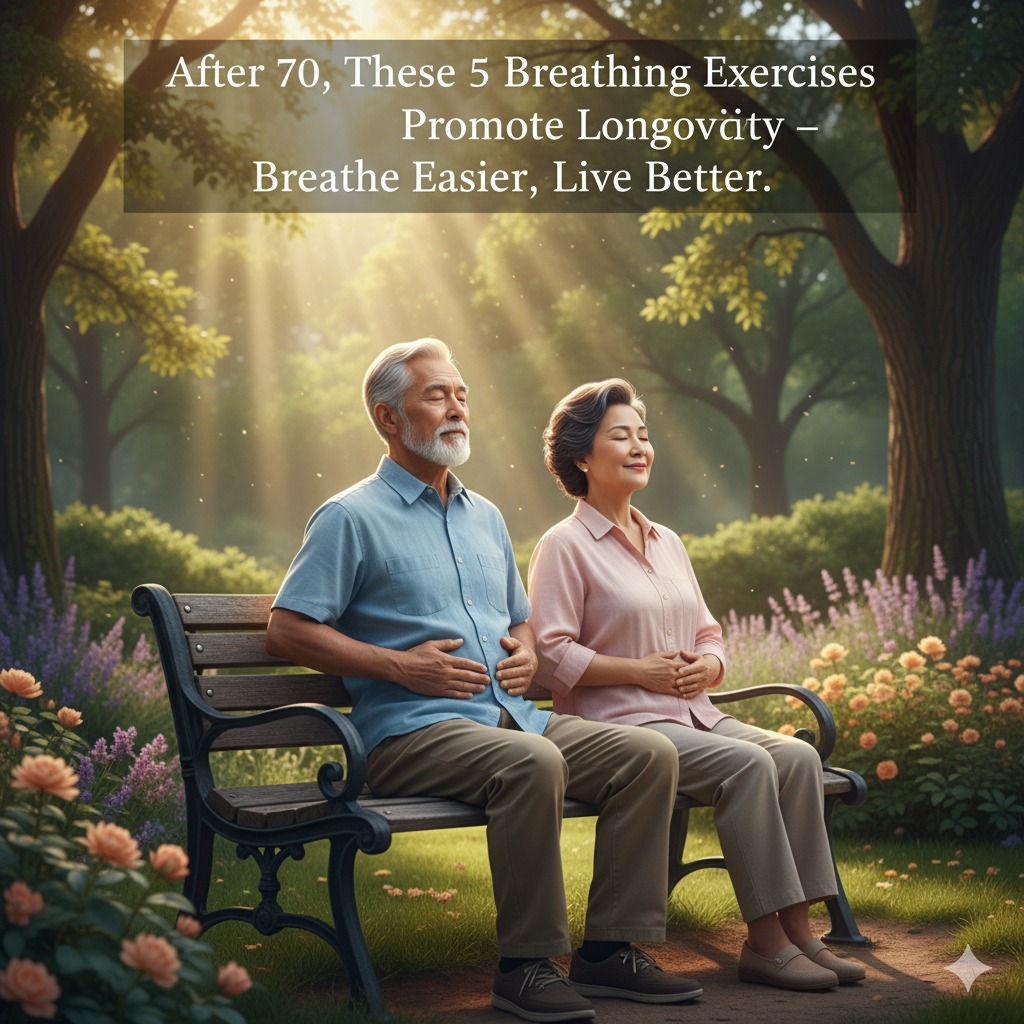
My dear friends, have you ever caught yourself sighing deeply, not out of sadness, but perhaps feeling a little short of breath after climbing a few stairs, or just wishing you had more sustained energy throughout your day? It’s a common feeling, isn’t it, as we gracefully navigate our golden years? But what if I told you there’s a simple, powerful tool you already possess that can profoundly impact your vitality, clarity, and even your longevity? It’s your breath! Often overlooked, the way we breathe can be a game-changer, especially as we age.
You see, proper breathing isn’t just about getting air into your lungs; it’s about optimizing every single cell in your body, calming your mind, and strengthening your core from the inside out. It’s about feeling more vibrant, more engaged, and more present in every moment. That’s why, in this heartfelt conversation, we’re going to explore 5 incredibly simple yet profoundly effective breathing exercises specifically tailored to help you, after 70, to breathe easier and live better. These aren’t complicated yoga poses or strenuous workouts; they are gentle techniques you can integrate into your daily routine, bringing immense benefits to your physical and mental well-being. Imagine feeling more energetic, less stressed, and truly embracing each day with a renewed sense of vigor. Let’s unlock the hidden potential of your breath together, and discover how these practices can promote a longer, more joyful life. We’re going to start by understanding the very foundation of good breathing, a technique that many of us have forgotten since childhood, so let’s dive right into our first essential exercise.
The Power of Your Breath: 5 Exercises for a Longer, Healthier Life
1. The Calming Art of Diaphragmatic Breathing (Belly Breathing)
Let’s begin with something truly fundamental: diaphragmatic breathing, often called belly breathing. Remember how babies breathe, with their little bellies rising and falling? That’s diaphragmatic breathing in action, and it’s the most efficient way to bring oxygen into your body. As we get older, and often due to stress or sedentary habits, we tend to become ‘chest breathers,’ taking shallow, quick breaths. This doesn’t fully engage our lungs and can actually increase feelings of anxiety. But we can easily relearn this natural, calming technique!
Here’s how you can try it: Find a comfortable spot, either sitting upright in a chair or lying down. Place one hand gently on your chest and the other on your abdomen, just above your navel. Now, as you inhale slowly through your nose, focus on feeling your belly rise, pushing your lower hand outwards. Your chest should remain relatively still. Then, as you exhale slowly through your mouth, gently contract your abdominal muscles, letting your belly fall inwards, feeling that lower hand move back. The key is to make your belly do the work, not your chest. Try to make your exhalation slightly longer than your inhalation. Practice this for about 5 to 10 minutes a day. The benefits are tremendous: it helps slow your heart rate, lowers blood pressure, and activates your body’s relaxation response, making you feel calmer and more centered. It’s a fantastic way to start or end your day, or even to de-stress during a busy moment.
2. Slow and Steady with Pursed-Lip Breathing
Now that we’ve rediscovered the power of belly breathing, let’s move on to a technique that’s particularly helpful if you sometimes feel short of breath or just want to gain more control over your breathing: pursed-lip breathing. Think of it like a gentle brake on your breath, slowing down your exhalation and helping you release more stale air from your lungs. This can be incredibly beneficial for anyone who finds themselves huffing and puffing after mild exertion, or even for those managing conditions that affect lung function.
To practice pursed-lip breathing, first take a slow, deep breath in through your nose, using your diaphragm as we just discussed. Count to two in your mind as you inhale. Then, purse your lips as if you’re about to whistle or gently blow out a candle. Slowly exhale through your pursed lips, counting to four or even longer. The idea is to make your exhalation at least twice as long as your inhalation. This controlled exhale creates a slight back-pressure in your airways, helping to keep them open longer and allowing more old air to escape, making room for fresh, oxygen-rich air. You can do this exercise anytime, anywhere – while walking, doing chores, or whenever you feel a little winded. It helps to reduce shortness of breath, promotes relaxation, and gives you a greater sense of control over your breathing. It’s a gentle yet effective way to improve your lung efficiency and overall comfort.
3. The Rhythmic Calm of Box Breathing (Square Breathing)
Transitioning from controlling our exhale, let’s explore a fantastic technique for mental clarity and stress reduction: Box Breathing, also known as Square Breathing. This exercise is beloved by first responders and athletes for its ability to quickly calm the nervous system and sharpen focus. It’s wonderfully rhythmic and easy to remember, making it perfect for finding your calm in any situation.
Here’s how it works: Imagine drawing a square with your breath. First, exhale all the air from your lungs. Then, slowly inhale through your nose for a count of four. Hold that breath for a count of four. Next, slowly exhale through your mouth for a count of four. Finally, hold your breath again, with empty lungs, for a count of four. And then repeat! Inhale (4), Hold (4), Exhale (4), Hold (4). Each side of the square represents one part of the breath cycle. You can adjust the count to three or five if four feels too long or too short, finding what’s comfortable for you. The regularity of Box Breathing helps to reset your nervous system, reducing anxiety and improving concentration. It’s an excellent tool to use before a doctor’s appointment, a family gathering, or any time you need to feel more grounded and present. This systematic approach to breathing really helps to quiet the mind and promote a sense of inner peace. Next, we will delve into a technique that balances your entire being.
4. Balancing Your Energy with Alternate Nostril Breathing (Nadi Shodhana)
Now that we’ve explored rhythmic breathing, let’s turn our attention to an ancient yet incredibly relevant practice: Alternate Nostril Breathing, or Nadi Shodhana. This beautiful technique is known for harmonizing the left and right hemispheres of your brain, balancing your energy, and promoting a profound sense of calm. It’s like a gentle massage for your nervous system, leaving you feeling centered and clear-headed.
To practice Alternate Nostril Breathing, find a comfortable seated position. Bring your right hand up towards your face. Use your right thumb to close your right nostril, and your ring finger to close your left nostril. We’ll only be using these two fingers. Begin by closing your right nostril with your thumb and inhaling slowly and deeply through your left nostril. Once you’ve taken a full breath, close your left nostril with your ring finger, release your thumb from your right nostril, and exhale slowly through your right nostril. After exhaling completely, inhale through your right nostril. Then, close your right nostril with your thumb, release your ring finger from your left nostril, and exhale through your left nostril. That completes one full round. Continue this cycle, alternating nostrils with each inhale and exhale. Try to keep your breath smooth and even, without forcing it. Practice for 5 to 10 minutes. Nadi Shodhana is wonderful for reducing stress, improving focus, and preparing for restful sleep. It brings a remarkable sense of balance and tranquility to both your body and mind.
5. The Harmonious Rhythm of Coherent Breathing
Finally, let’s explore a wonderfully effective technique for optimizing your entire system: Coherent Breathing. This practice, often referred to as resonant breathing, aims to bring your heart rate, brain waves, and nervous system into a harmonious, synchronized rhythm. It’s about finding your body’s natural sweet spot for relaxation and efficiency, and it’s surprisingly simple to do!
The goal with Coherent Breathing is to breathe at a rate of approximately six breaths per minute. This means inhaling for about five to six seconds and exhaling for about five to six seconds. You can count slowly in your head, or even use a simple timer app that guides your breath. The important thing is to maintain a smooth, even, and consistent rhythm. Inhale deeply and gently through your nose for five to six seconds, allowing your belly to expand comfortably. Then, exhale slowly and smoothly through your nose or gently pursed lips for five to six seconds, letting your belly naturally contract. There’s no holding of breath; it’s a continuous, flowing motion. Practicing Coherent Breathing for just 10-20 minutes a day has been shown to improve heart rate variability, reduce blood pressure, enhance emotional regulation, and boost overall well-being. It’s a powerful way to bring your body into a state of optimal performance and deep relaxation, helping you feel more balanced and energetic throughout your day. This consistent, rhythmic breath can truly transform your inner landscape.
My dear friends, we’ve journeyed through five wonderful breathing exercises together: the foundational Diaphragmatic Breathing, the control of Pursed-Lip Breathing, the calming rhythm of Box Breathing, the balancing act of Alternate Nostril Breathing, and the harmonizing power of Coherent Breathing. Isn’t it amazing to think that something so fundamental as your breath holds such incredible potential for enhancing your life, especially after 70?
Remember, these aren’t just exercises; they are invitations to cultivate a deeper connection with your body and mind, simple yet profound habits that can lead to greater longevity and a much more vibrant, fulfilling life. You don’t have to master all five overnight. Pick one or two that resonate most with you, start with just a few minutes each day, and gradually build up your practice. Small, consistent efforts truly add up to big changes when it comes to your health and happiness. Imagine the difference a few minutes of mindful breathing can make in your energy levels, your stress response, and your overall sense of peace. You are taking active steps towards a healthier, more joyful you!
We hope this conversation has inspired you to explore the incredible power within your own breath. We’d absolutely love to hear about your experiences! Please feel free to share your thoughts or any questions you might have in the comments section below. Your insights could inspire someone else! If you found this article helpful, please consider liking it and following our channel’s website for more encouraging and practical content designed to help you live your best life. Your journey to breathing easier and living better is just beginning, and we’re here to support you every step of the way. Keep breathing deeply, keep living fully, and remember: you can truly live your best life at any age!