
Remember those days when you could stride confidently through any room, perhaps even leap over a puddle without a second thought? As we gracefully embrace our golden years, the hustle and bustle might slow down a bit, but our desire for independence and confidence certainly doesn’t. Yet, for many of us, a quiet worry can sometimes creep in: the fear of falling. It’s a completely natural concern, especially as our bodies change, but what if I told you that you have more power than you think to keep yourself steady and strong, right in the comfort of your own home?
You see, falls aren’t just an inevitable part of getting older. Many falls can actually be prevented by simply keeping our muscles strong and our balance sharp. Just like we maintain our homes, we need to maintain our bodies! Today, we’re going to explore a simple yet incredibly effective way to do just that. We’ll look at 5 strength-building moves that are specifically designed for folks over 60, to help you feel more secure, stable, and ready to enjoy every moment without that nagging worry.
These aren’t complicated exercises that require a gym or special equipment. They are practical, gentle, and can be easily incorporated into your daily routine. Think of them as your secret weapons for maintaining your physical safety and precious independence. We’re talking about building strength where it matters most: in your legs, your core, and your ankles, all crucial for keeping you upright and agile. So, let’s get ready to transform that worry into confidence, one gentle move at a time. Let’s start with the first essential habit to build that foundational strength.
5 Strength-Building Moves to Prevent Falls at Home
Our journey to better balance and strength begins with a cornerstone exercise, something familiar yet incredibly effective for your lower body. We’ll be focusing on a movement that strengthens the very muscles responsible for helping you stand up from a chair, climb stairs, and generally move around with ease. Think of these as your body’s natural shock absorbers and stabilizers. Let’s dive into our first powerful move.
1. The Mighty Chair Squat
Have you ever noticed how much effort it takes to get up from your favorite armchair sometimes? That’s where the Chair Squat comes in. This exercise is fantastic because it mimics a movement you do every single day, making it incredibly functional for fall prevention. It builds strength in your quadriceps, hamstrings, and glutes – all key muscles for walking, balancing, and recovering if you stumble.
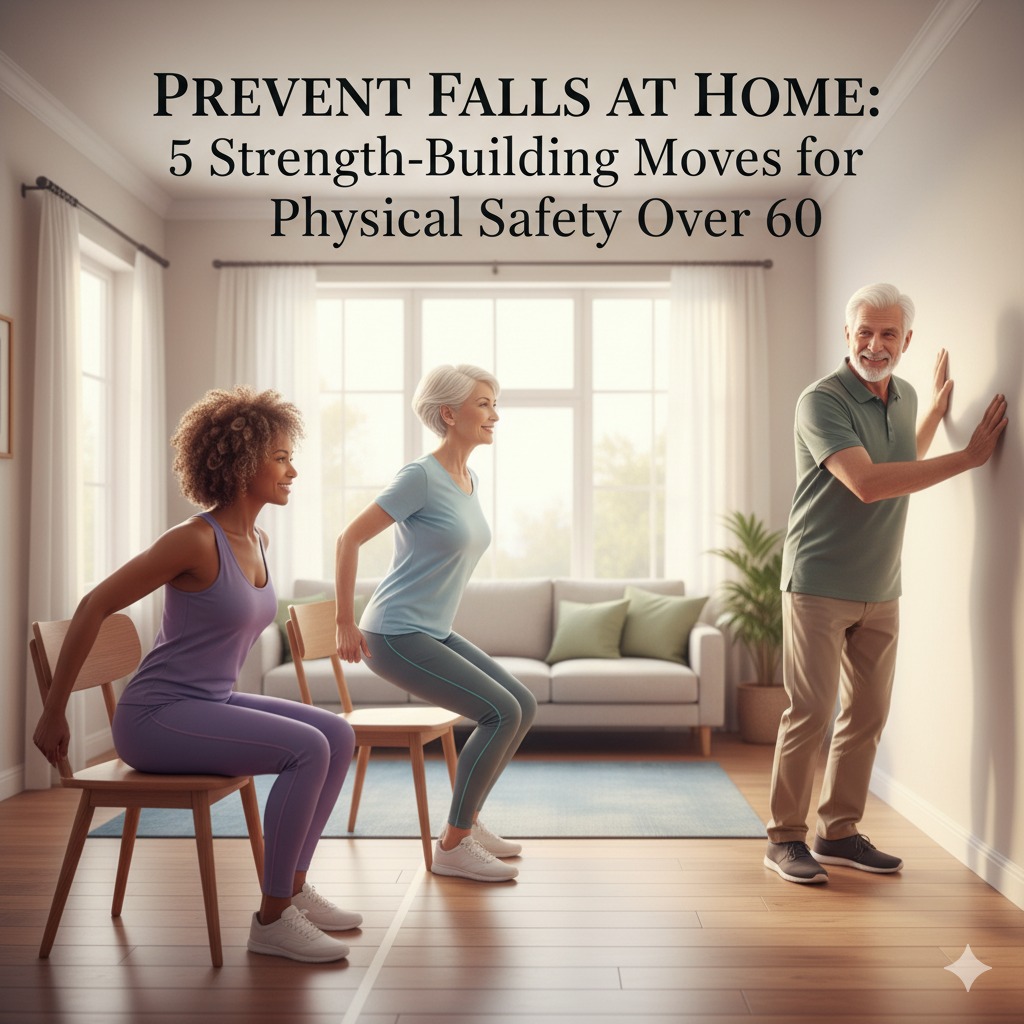
To do this, find a sturdy chair, preferably one against a wall so it won’t slide. Stand directly in front of it with your feet shoulder-width apart, toes pointing forward. Now, slowly and carefully, pretend you’re going to sit down, letting your hips push back as if you’re reaching for the chair with your bottom. Keep your chest up and your gaze forward. Just before you actually sit down, push through your heels and stand back up to the starting position. It’s like a gentle up-and-down motion. If it feels too challenging at first, you can actually sit down and then stand back up, using the chair for full support. Start with 8-10 repetitions, and as you get stronger, you can work your way up to 15. Remember, slow and controlled is the name of the game here, ensuring good form over speed.
Now that we’ve built some foundational leg strength with the chair squats, let’s shift our focus to an often-overlooked area that’s equally vital for fall prevention: your upper body and core. These muscles play a crucial role in maintaining your posture and can even help you brace yourself safely if you do lose your balance. It’s time for our second simple yet effective exercise.
2. Steady Wall Push-ups
While often associated with building big arm muscles, the Wall Push-up is actually an excellent, safe way for us to strengthen our chest, shoulders, and core, all while keeping our feet firmly on the ground. Think about it: if you were to trip, having strong upper body muscles can help you push off a surface to regain your balance or even cushion a fall. This move is incredibly adaptable and doesn’t put stress on your joints.
To perform this, find a clear, sturdy wall. Stand about an arm’s length away, facing the wall. Place your palms flat against the wall, a little wider than your shoulders, at chest height. Now, slowly bend your elbows, letting your body lean towards the wall. Keep your back straight, like a plank, and engage your core muscles – imagine pulling your belly button towards your spine. Go as far as feels comfortable, then gently push yourself back to the starting position. It’s a controlled lean and push. Start with 10-12 repetitions, and as you gain strength, you can gradually increase the distance between your feet and the wall to make it a bit more challenging. This isn’t about being a bodybuilder; it’s about building functional strength for everyday safety.
Excellent! We’ve worked on both our lower and upper body strength. Now, let’s move on to something that directly targets one of the most important aspects of fall prevention: your balance. This next exercise is a gentle yet powerful way to challenge your stability and improve your coordination. It’s about retraining your body to stay upright, even when things get a little tricky. Get ready to walk a different line with our third key move.
3. The Balancing Heel-to-Toe Walk
This next exercise, the Heel-to-Toe Walk, is a superstar for improving your balance and coordination. It’s sometimes called a “tandem walk,” and it’s fantastic for sharpening your proprioception – that’s your body’s sense of where it is in space. This skill is vital for navigating uneven surfaces, stepping over obstacles, and generally feeling more stable on your feet, reducing the risk of a misstep leading to a fall.
To begin, find a clear, open space in your home, perhaps along a hallway or an empty wall where you can place a hand for support if needed. Stand tall, focusing your gaze on a point in front of you. Now, take a step forward, placing the heel of your leading foot directly in front of the toes of your back foot. Essentially, you want your heel and toes to be touching or very close. It’s like walking on a tightrope, but much safer! Take 5-10 slow, deliberate steps in this manner, then turn around and repeat. Focus on keeping your core engaged and taking slow, controlled steps. It’s not about speed, but about precision and control. As you become more confident, you might try taking a few steps without holding onto the wall. This simple walk can make a world of difference in your daily stability.
Fantastic! We’re building a repertoire of strength and balance exercises. We’ve tackled leg strength, upper body support, and dynamic balance. Now, let’s introduce an exercise that takes balance to the next level, challenging your stability in a different and highly effective way. This move is designed to strengthen the tiny stabilizing muscles around your ankles and hips, which are crucial for quick recoveries if you feel a wobble. Get ready to stand tall and steady with our fourth essential move.
4. Confident Single-Leg Stands
The Single-Leg Stand is a fundamental exercise for improving static balance. Think about how often you briefly stand on one leg – perhaps when putting on pants, stepping up a curb, or reaching for something. This move directly strengthens the muscles around your ankles, knees, and hips, which are all vital for maintaining your equilibrium and preventing those sudden shifts that can lead to a fall. It’s incredibly simple, yet profoundly effective.
To perform this, find a sturdy surface like a counter or a wall that you can hold onto for support. Stand with your feet hip-width apart. Gently lift one foot a few inches off the floor, bending your knee slightly. Aim to hold this position for 10-15 seconds, keeping your standing leg slightly bent (not locked) and your core engaged. It’s perfectly fine to hold onto your support with one or two hands at first. As your balance improves, try to use just one finger for support, then eventually try to hold it without any hand support at all. Then, switch to the other leg. Do this 2-3 times on each leg. Remember to take your time; consistency is more important than how long you can hold it initially. This move helps build that quiet, inherent stability that keeps you upright throughout your day.
You’re doing great, truly! We’ve covered four powerful moves that target various aspects of strength and balance. Now, for our fifth and final exercise, we’re going to focus on a small but mighty muscle group that often gets overlooked: your calves and ankles. These muscles are your first line of defense against trips and stumbles, giving you the power to push off and make quick adjustments to your footing. Let’s finish strong with a simple yet effective way to fortify your foundation.
5. Steady Calf Raises
Our final exercise, Calf Raises, might seem subtle, but its impact on fall prevention is significant. Strong calf muscles are essential for pushing off the ground when you walk, maintaining stability, and reacting quickly if you step unevenly. They play a crucial role in ankle stability, which is often where a trip or stumble begins. By strengthening them, you’re essentially giving your feet a more robust foundation.
To do this, stand tall next to a sturdy chair or counter for support, with your feet hip-width apart. Slowly, rise up onto the balls of your feet, lifting your heels as high as comfortably possible. Imagine trying to touch the ceiling with the top of your head as you rise. Hold at the top for a second, really feeling those calf muscles work, then slowly lower your heels back down to the floor. The key here is the slow, controlled movement both up and down. Avoid bouncing! Start with 10-15 repetitions, and you can gradually increase this as your strength improves. You’ll notice an improvement not just in your stability, but also in how easily you can navigate stairs or inclines. This simple move adds a vital layer of protection against falls.
What an incredible journey we’ve taken together, exploring 5 simple yet profoundly effective strength-building moves designed to enhance your physical safety and independence over 60. We started with the foundational leg power of Chair Squats, then fortified your upper body and core with Wall Push-ups. We sharpened your dynamic balance through the precise Heel-to-Toe Walk, then challenged your static stability with confident Single-Leg Stands, and finally, we strengthened your crucial ankle support with steady Calf Raises.
Remember, each of these movements, when performed consistently and safely, contributes significantly to reducing your risk of falls at home. They’re not about becoming a weightlifter; they’re about building practical, functional strength that directly translates to more confident strides, better balance, and a greater sense of security in your everyday life. This isn’t just about avoiding falls; it’s about embracing a fuller, more active lifestyle where you feel truly comfortable and capable in your own home and beyond.
Always remember to listen to your body and prioritize safety. If you have any underlying health conditions or concerns, it’s always a good idea to chat with your doctor or a physical therapist before starting any new exercise routine. They can offer personalized advice to ensure these moves are right for you. Small, consistent efforts truly do add up to monumental changes when it comes to your health and well-being.
We hope this guide empowers you to take proactive steps towards a safer, stronger you! We’d love to hear about your experiences. Have you tried any of these moves before? What are your go-to tips for staying active and preventing falls? Please share your thoughts and stories in the comments section below – your insights could inspire someone else! If you found this article helpful, do us a favor and give it a like, and don’t forget to follow our channel for more valuable content designed to help you live your best life at any age. Stay strong, stay safe, and keep thriving!