
Have you ever found yourself walking into a room, only to pause and wonder, ‘Now, why did I come in here?’ Or maybe a familiar name is just on the tip of your tongue, but it refuses to surface? It happens to the best of us, especially as we gather more wisdom and years. It’s easy to think that a little forgetfulness is just a natural part of getting older, and in some ways, it is. But what if I told you there’s a lot you can do to keep your mind as sharp, agile, and alert as ever, even well into your 70s and beyond? It’s not about grand, complicated tasks; it’s about engaging your brain in fun, simple ways, almost like a daily workout for your mind.
Think of your brain like a muscle. The more you use it, the stronger it gets, and the better it performs. Just as we might walk or do light exercises to keep our bodies spry, our minds thrive on regular stimulation. And the good news is, this stimulation can be incredibly enjoyable! It’s all about purposeful play that challenges different parts of your brain, from memory recall to problem-solving and logical thinking. In this article, we’re going to explore 4 brain games that are not only fantastic for preventing forgetfulness and keeping you alert, but they’re also genuinely fun and easy to incorporate into your daily routine. We’ll look at how these simple activities can make a big difference in how you feel, think, and navigate your day with confidence. So, let’s dive into our first way to give your brain a fantastic workout!
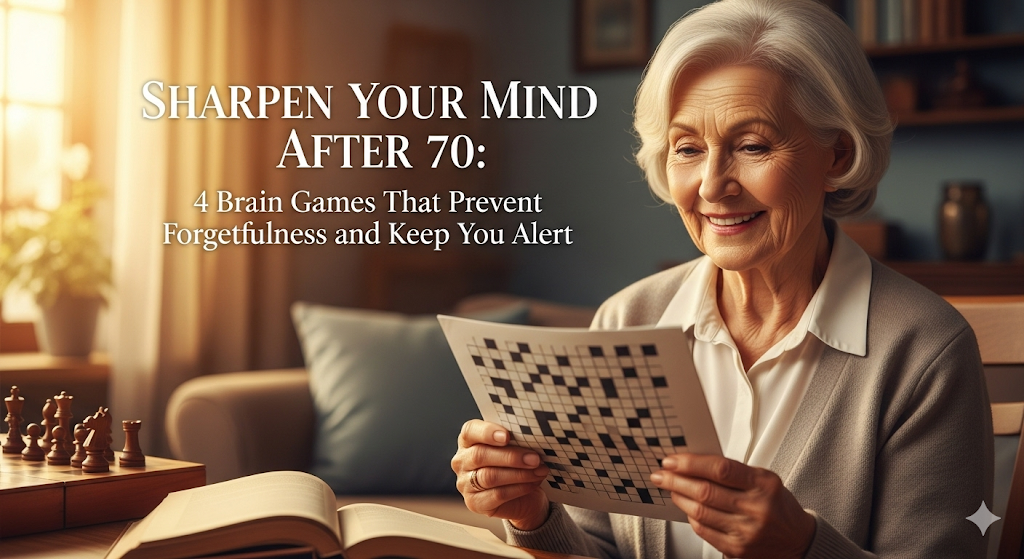
Sharpen Your Mind After 70: 4 Brain Games That Prevent Forgetfulness and Keep You Alert
1. The Joy of Crosswords and Sudoku: Words and Numbers That Whet Your Wit
Let’s start with a couple of classics that many of you might already enjoy: crossword puzzles and Sudoku. These aren’t just idle pastimes; they are powerful tools for brain health. Think about a crossword puzzle. You’re tapping into your vocabulary, recalling words you might not have used in ages, and exercising your memory. You’re also engaging your problem-solving skills as you figure out how different words fit together, both horizontally and vertically. It’s like a treasure hunt for your brain, where every correct answer is a little victory that strengthens those neural pathways. You can grab a newspaper, pick up a puzzle book from the store, or even find countless free ones online on your tablet or computer. Start with an easier one if you like, and then challenge yourself with more difficult grids as you get better.
Now, if words aren’t always your cup of tea, then Sudoku is an excellent alternative that focuses on logical reasoning and pattern recognition. There are no words involved, just numbers, but don’t let that intimidate you if you’re not a ‘math person.’ Sudoku is purely about logic: fitting numbers 1 through 9 into rows, columns, and 3×3 squares without repetition. It requires focus, concentration, and a systematic approach, which are all fantastic for keeping your mind sharp and preventing that feeling of mental fogginess. The beauty of both crosswords and Sudoku is that they can be done anywhere, anytime – over your morning coffee, during a quiet afternoon, or as a calming activity before bed. They provide a gentle yet effective challenge that helps maintain cognitive function, making them perfect brain games for preventing forgetfulness and keeping you alert.
2. Embracing the New: Learning a Language or Musical Instrument
Our next brain-sharpening activity might sound a little more adventurous, but it’s incredibly rewarding: learning something entirely new, like a foreign language or a musical instrument. You might think, ‘At my age? Isn’t that too hard?’ But that’s precisely why it’s so effective! When you learn something completely new, your brain has to form new connections, essentially rewiring itself in exciting ways. This process is called neuroplasticity, and it’s one of the best ways to keep your brain vibrant and active. Imagine the satisfaction of being able to say a few phrases in French or Spanish, or playing a simple tune on a piano or ukulele. It’s not about becoming fluent or a concert musician; it’s about the journey of learning itself.
Learning a language, even just a few words and phrases, engages multiple parts of your brain simultaneously: memory for vocabulary, listening skills for understanding, speaking skills for pronunciation, and even visual processing if you’re reading. You’re constantly making associations and connecting new information, which is a powerful mental workout. Similarly, learning a musical instrument is a fantastic brain booster. It combines auditory processing (listening to notes), motor skills (moving your fingers), memory (recalling notes and melodies), and even emotional expression. There are many beginner-friendly options, from online apps and tutorials to local community classes designed specifically for seniors. Think of it as opening up a whole new world for your mind, enriching your life, and giving your brain a truly comprehensive workout that significantly contributes to preventing forgetfulness and staying mentally alert.
3. Memory Mastery: From Matching Games to Mental Shopping Lists
This next category focuses directly on boosting your memory, which is often the first thing people worry about as they get older. These are hands-on ways to playfully challenge your recall abilities. One great example is classic matching games, whether it’s a physical card game where you turn over cards to find pairs, or digital versions available on tablets and phones. These games require you to remember the location of hidden items, actively engaging your short-term memory and concentration. As you play, you’re strengthening those pathways responsible for recalling information, making them more robust for everyday tasks.
Beyond formal games, you can incorporate memory exercises into your daily life. Try to remember your shopping list without writing it down, even if it’s just for a few items at first. You can use visualization techniques, like imagining each item in a specific place in your house, or creating a silly story that links them together. Another fun exercise is to try to recall the details of your day at bedtime – what you had for breakfast, who you spoke to, a specific conversation. These mental gymnastics might seem small, but they accumulate over time, building your brain’s capacity to store and retrieve information efficiently. Regularly practicing these memory-focused activities is crucial for actively combating forgetfulness and ensuring you remain mentally alert and engaged with the world around you. It’s all about making your memory muscles stronger, one playful exercise at a time.
4. Strategic Play: Board Games and Card Games for Cognitive Agility
Finally, let’s talk about the power of strategic board games and card games. These aren’t just for family gatherings; they are incredible tools for maintaining and even enhancing your cognitive abilities. Games like Chess, Checkers, Bridge, Rummy, or even newer strategy board games, demand critical thinking, planning, foresight, and problem-solving. You have to anticipate your opponent’s moves, plan several steps ahead, and adapt your strategy as the game unfolds. This kind of complex thinking is like a full-body workout for your brain, engaging areas responsible for executive function and decision-making.
What’s more, many of these games are social activities, whether you’re playing with family, friends, or at a local community center. Social interaction itself is a huge booster for brain health, reducing feelings of isolation and stimulating various cognitive processes through conversation and shared experience. Playing cards, for instance, involves memory (remembering which cards have been played), arithmetic (keeping score), and strategy (deciding which cards to play). Whether it’s the quiet concentration of a game of Chess or the lively banter around a card table, these strategic games offer rich opportunities to keep your mind active, engaged, and challenged. They are a delightful way to prevent forgetfulness, foster quick thinking, and ensure you stay wonderfully alert and connected, proving that playing games is far from frivolous – it’s a vital part of healthy aging!
So, there you have it: four engaging and effective ways to keep your mind sharp and vibrant well into your golden years. We’ve explored the brain-boosting benefits of classic puzzles like crosswords and Sudoku, the exciting challenge of learning new skills like a language or instrument, practical memory exercises like matching games and mental shopping lists, and the strategic fun of board and card games. Each of these activities, in its own unique way, challenges different parts of your brain, encouraging new connections and keeping your cognitive functions strong.
Remember, the goal isn’t to become a grandmaster or a linguistic prodigy; it’s about consistent engagement and enjoyment. Small, regular mental workouts are far more effective than sporadic, intense ones. Just like going for a daily walk keeps your body moving, a daily crossword or a few minutes of learning a new word can keep your mind nimble. It’s about finding what you enjoy and making it a joyful part of your routine. You have the power to influence your brain health, and it’s never too late to start!
We’d love to hear from you! Which of these brain games do you already enjoy, or which one are you excited to try first? Share your thoughts and experiences in the comments section below. Your insights could inspire someone else! And if you found this article helpful, please give it a like and follow our channel’s website for more helpful content designed to help you live your best life at any age. Keep playing, keep learning, and keep that wonderful mind of yours sparkling!